Service
Commercial Pool Leak Detection
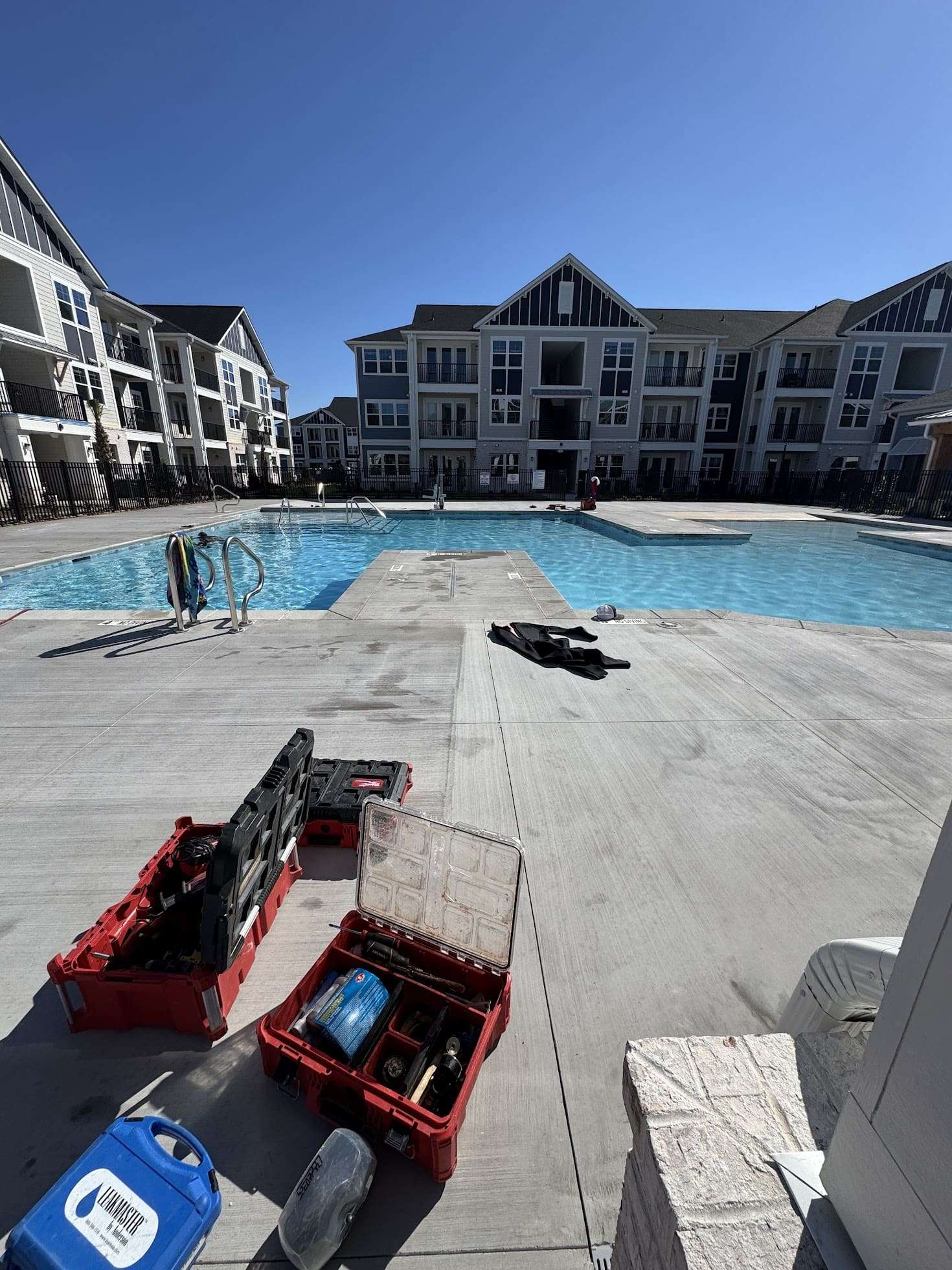
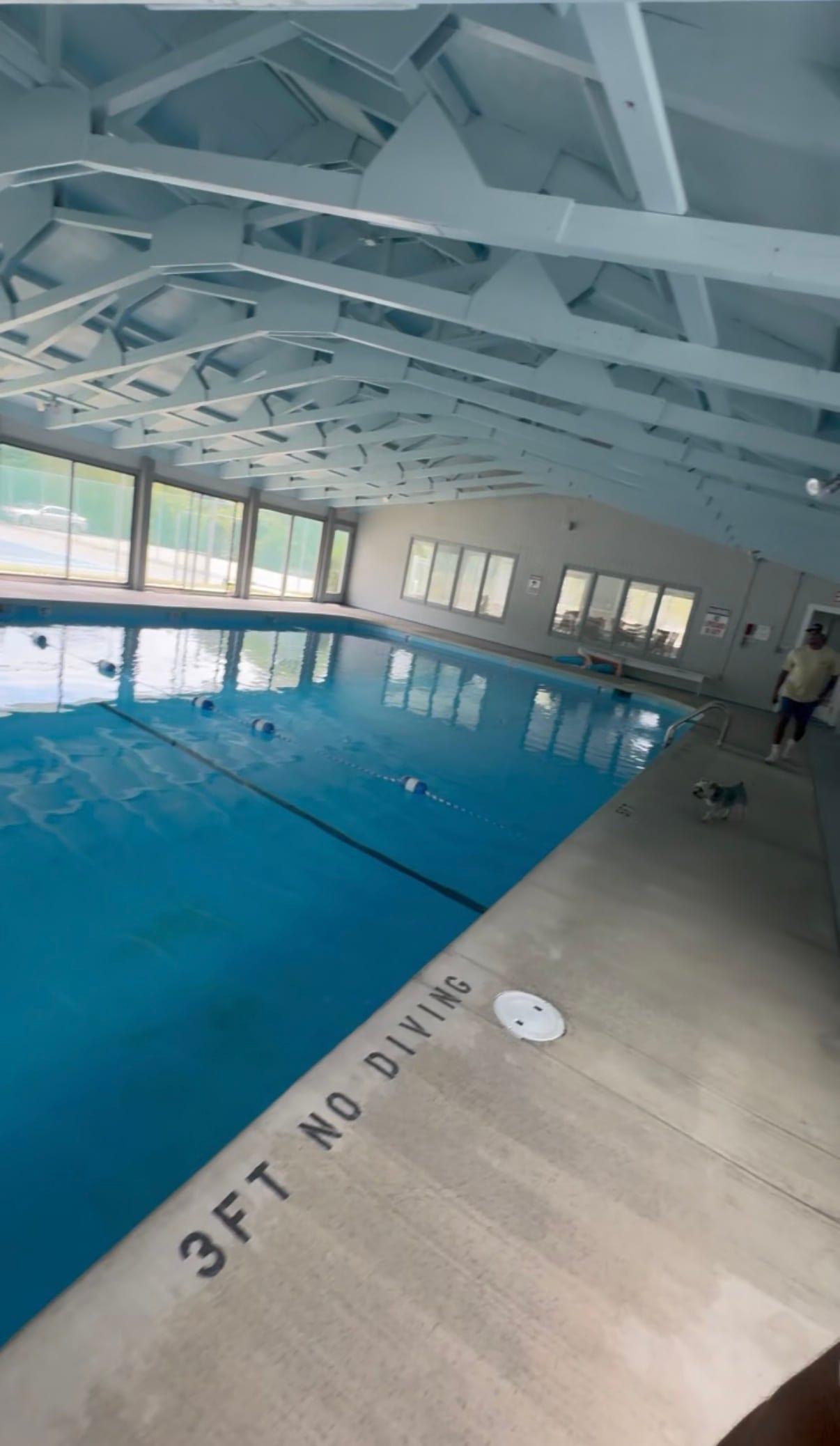
Commercial pools come with different challenges. Whether it is an HOA or apartment community, a hotel, or any pool a board or property manager is responsible for, the leak matters, but so do the reporting, scheduling around pool use, and the fact that the person who approves the repair is usually not the person who noticed the problem. Our job is not finished when we find the leak. It is finished when the person who has to approve the work understands it too. We work with HOAs, communities and property managers across coastal North Carolina. Do you manage several pools? See how we work with property managers.
Built for the people who approve the work
The detection work is the same as on any other pool: isolate what can be isolated, test rather than assume, and narrow the leak down to one location before anything is opened. What changes is the documentation and the timing. We write up findings so a board or manager can act on them, and we schedule testing around when the pool is in use.
Commercial systems are larger, and that changes the method more than you might expect. More lines, fittings and openings mean more places to test, and a real chance of more than one leak at the same time. Stopping at the first leak is how a commercial pool ends up being repaired twice in one season, so we keep testing the rest of the system after we find one.
On a pool this size, a leak usually shows up somewhere other than the water line. The pool needs more and more refill water, the chemical balance will not hold because fresh water dilutes it faster than it can be corrected, and the equipment keeps running while the water level keeps dropping. Often, what finally gets someone’s attention is the water bill rather than the pool itself.
When a property has more than one body of water, such as a pool and a spa that sometimes share equipment, the first question is which one is actually leaking. We answer that by testing each separately, before anyone opens a deck on the assumption that the leak must be in the larger one.
What commercial pools need that home pools do not
The detection work is the same. These are the things that determine whether the results are useful to the person who has to act on them.
- Documentation
- Written findings that still make sense when forwarded to someone who was not at the pool.
- Scheduling
- Testing scheduled around operating hours and swim schedules, not around our convenience.
- Scale
- More lines and fittings mean more places to test, and a real chance of several leaks at once.
- Water cost
- At commercial volumes, an ongoing leak is a measurable operating expense, and that usually determines how urgent the repair is.
- One point of contact
- The same people come to every visit. There is no dispatch center or call queue.
- Clear next steps
- The findings give you what you need to choose between a repair, further testing, or leaving something alone for now.
Tell us about your pool
Describe what you are seeing, and we will tell you what it may mean and what a visit would involve. If the water level is dropping fast, call us. You will reach a family-owned, owner-led team.
Can you work around our operating hours?
Yes. Tell us your schedule when you call and we will work around it. If part of the pool or the equipment has to be taken out of use during testing, we will tell you before we start, not after.
How do you tell whether the leak is in the plumbing or the shell?
By testing them separately. Each line is isolated and pressure-tested, which either confirms that it is leaking or shows that it is sound. That leaves the structure and the fittings, which we test directly. Working in that order means everything is ruled out based on evidence, not guesswork.
We have a pool and a spa. Can you tell which one is losing?
Yes. That is usually the first thing we establish, and we test them separately. When the two share equipment, the water loss can show up in whichever one is easier to see, so the obvious answer is not always the right one.
Do we need leak detection, or an inspection?
If the pool is losing water and you want to know where it is going, you need leak detection. If nothing is obviously wrong and you want a written assessment of the pool and its equipment, you need an inspection. If you are not sure, tell us what you are seeing when you call and we will tell you which one fits.
Can you provide documentation for our board?
Yes. We provide written findings with photographs, which is what a board or manager needs in order to approve the work.
Do you handle multiple properties?
Call and tell us about your properties. We will be honest about how much we can take on rather than overcommit.