Service
Pool Resurfacing
Resurfacing replaces the surface of the pool rather than covering it. It is the right choice when the finish has worn through, feels rough underfoot, is stained or flaking, or has reached the end of its life. At that point, another coat of anything is money spent postponing the job. Resurfacing is available in Wilmington and every other area we serve in North Carolina.
Replacing the surface, not covering it
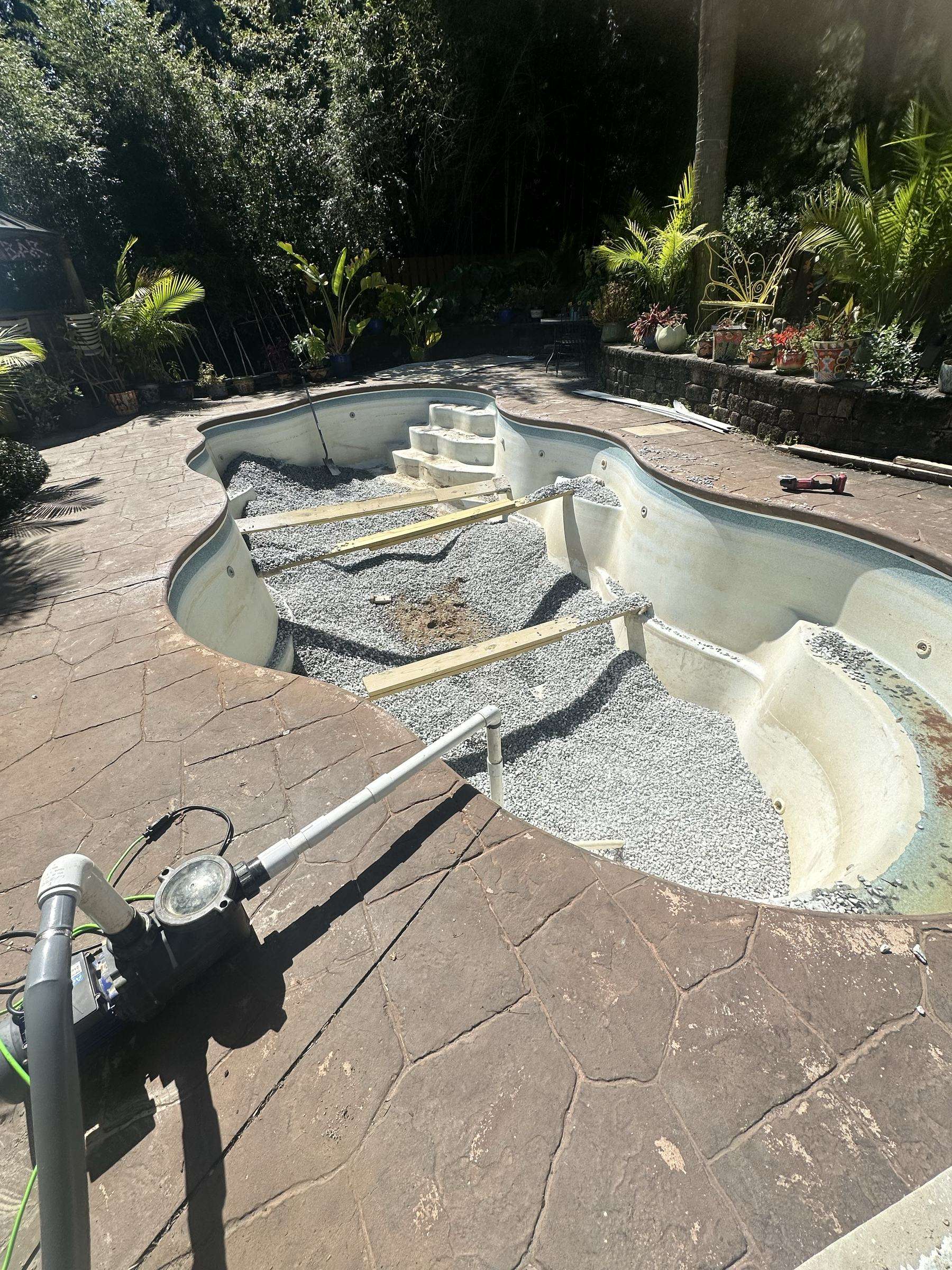
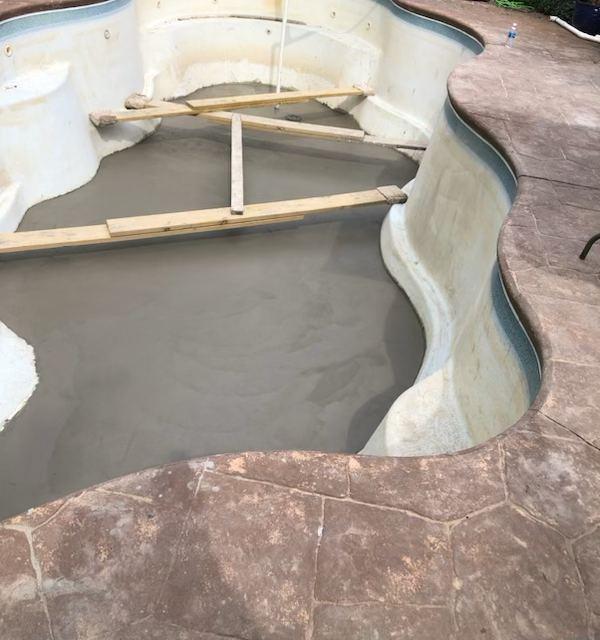
The pool is drained and the failed surface is removed so the new one can bond to sound material underneath. Removing the old surface is the difference between resurfacing and painting, and it is why resurfacing lasts longer: the new finish becomes the surface instead of a layer sitting on top of it.
Removing the old surface shows what is underneath. Cracks, hollow areas and poor earlier repairs come to light at this stage, and we will show them to you rather than cover them up.
Resurfacing compared with painting
Homeowners often compare quotes for both, so here is an honest comparison rather than a push toward the bigger job.
- What each involves
- Resurfacing removes the old surface and applies a new one. Painting applies a coating over the existing surface.
- When to paint
- The shell is sound, the existing surface is intact, and the goal is a better appearance. It is a quicker job at a lower cost.
- When to resurface
- The surface is rough, failing or flaking, or has already been coated repeatedly. A new coat will not hold on a surface that is breaking down.
- Cost
- Resurfacing costs more up front. Whether it costs more over time depends on how many coats the alternative needs.
- Fix leaks first
- Either way, a pool that is losing water should be checked for leaks before it is refinished. Resurfacing over a leak that has not been found only hides the problem.
Tell us about your pool
Describe what you are seeing, and we will tell you what it may mean and what a visit would involve. If the water level is dropping fast, call us. You will reach a family-owned, owner-led team.
How do I know if my pool needs resurfacing rather than painting?
If the surface is rough underfoot, flaking, exposing what is underneath, or has been coated several times already, a new coating has nothing sound to hold onto. If the surface is intact and your concern is appearance, painting is the quicker job.
What finish do you use?
That depends on the pool and its current surface. Call and describe your pool, and we will tell you what suits it. No single finish is right for every pool.
Should a leak be found first?
Yes. Resurfacing a pool that is losing water means covering a problem that has not been solved. Leak detection is the work this company was built on, so we can handle it before resurfacing begins.
How long does it take?
It depends on the size of the pool, how much has to be removed and the weather. You will get a schedule for your pool before work begins.